Few school-related calls are more unsettling than being told your child has been suspended. Whether it comes as a shock or something you feared might happen, the moment itself can feel confusing, emotional and rushed. Parents often find themselves trying to process what has happened while also being expected to respond quickly.
In that moment, it is not always clear what a suspension actually means, what your rights are, what the school is required to do, or what happens next. Many parents worry they have somehow reached the end of the road. In reality, a suspension is usually part of a wider process — not the end of your child’s education, and not a permanent label.
This guide explains what suspension means in England, why schools use it, what should happen during and after the suspension, and how to support your child without making an already difficult situation worse.
This article focuses mainly on England, where the term “suspension” is now used instead of “fixed-term exclusion”.
First, what does suspension actually mean?
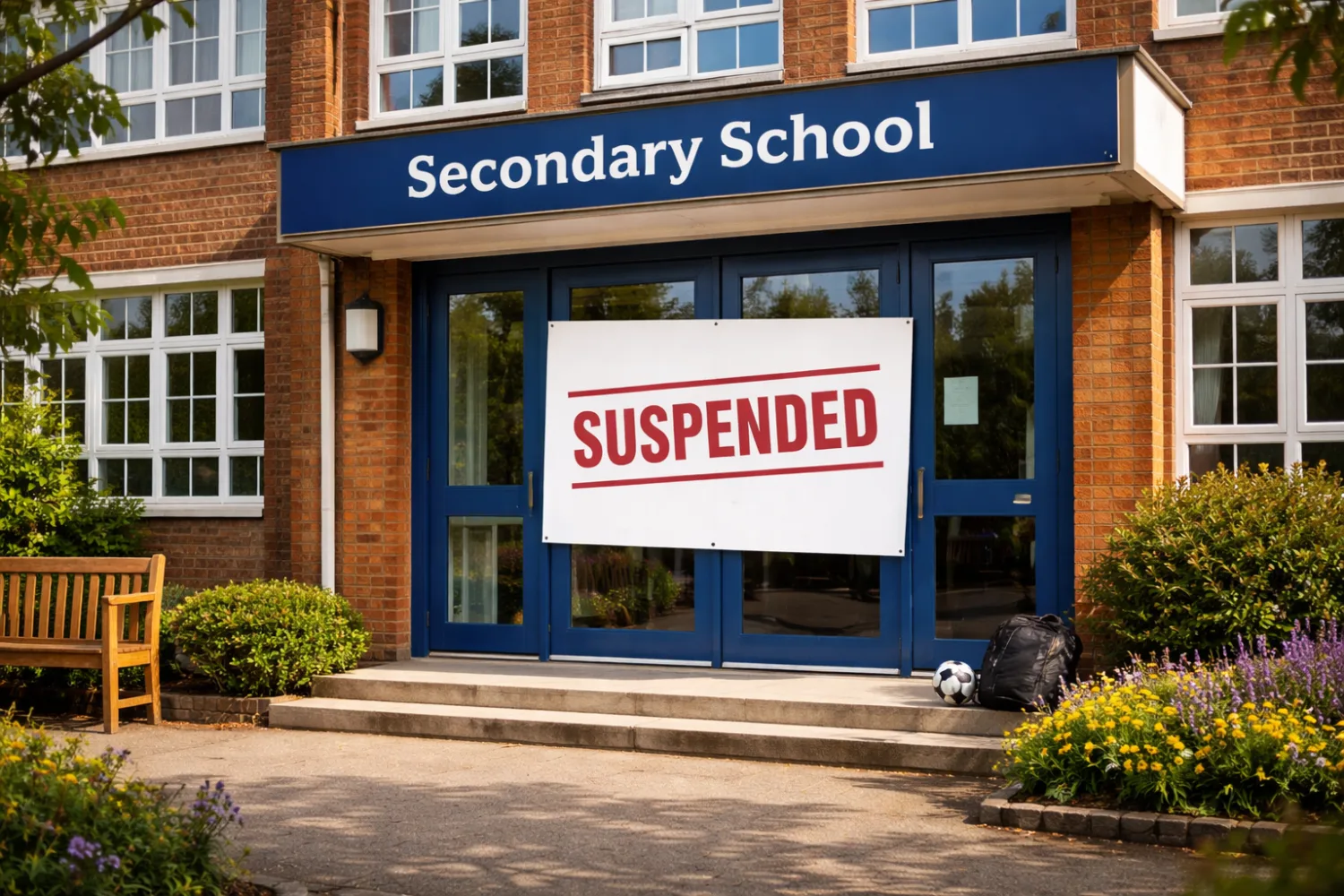
A suspension means your child is temporarily not allowed to attend school for a set number of days. It is different from permanent exclusion, where a child is removed from the school entirely.
Suspensions are usually used when a school believes a serious rule has been broken, or when allowing the child to remain in school would significantly disrupt others or pose a risk.
That might include behaviour incidents, repeated breaches of school rules, or situations where the school believes a clear boundary needs to be set. But it is important to understand that suspension is not meant to be purely punitive. Schools are expected to use it as part of a broader approach to behaviour and support.
Why schools suspend pupils
From a parent’s point of view, a suspension can feel like the school is rejecting your child. From the school’s point of view, it is usually about managing behaviour, maintaining safety, and setting expectations for the wider school community.
Schools are expected to use suspension proportionately. That means it should not be the default response to minor issues, but it can be used where behaviour is serious, repeated, or has not improved despite earlier interventions.
Sometimes suspension follows a single incident. In other cases, it follows a pattern of behaviour where previous steps have not worked.
What should happen immediately after a suspension
If your child is suspended, the school should inform you as soon as possible, usually by phone and then in writing. The written notice should explain the reason for the suspension, how long it will last, and what happens next.
You should also be told about your rights, including the right to make representations to the governing body if the suspension reaches a certain length.
One of the most important practical points is that during the first five school days of a suspension, your child should not be in a public place during school hours without a good reason. This is something many parents are not aware of, but it is part of the legal framework around suspensions.
How long can a suspension last?
Suspensions can vary in length, but there are limits.
A single suspension can last up to 45 school days in a year, but that is the total maximum across all suspensions in one academic year — not for a single incident in most cases.
More commonly, suspensions are much shorter, often between one and five days. Longer suspensions tend to be used for more serious incidents or where there have been repeated issues.
If the suspension is for more than five school days, the school must arrange suitable full-time education for your child from the sixth day onwards.
What your child should be doing during suspension
Schools are expected to provide work for your child to complete during the suspension. This is not always as structured as normal school learning, but it is intended to prevent your child from falling too far behind.
In reality, this is one of the more difficult parts for families. Some children are willing to engage with the work. Others are not, especially if they are already feeling upset, defensive or disengaged from school.
The goal during this period is not perfection. It is to keep some connection with learning and routine, even if it is lighter than usual.
What happens when your child returns to school
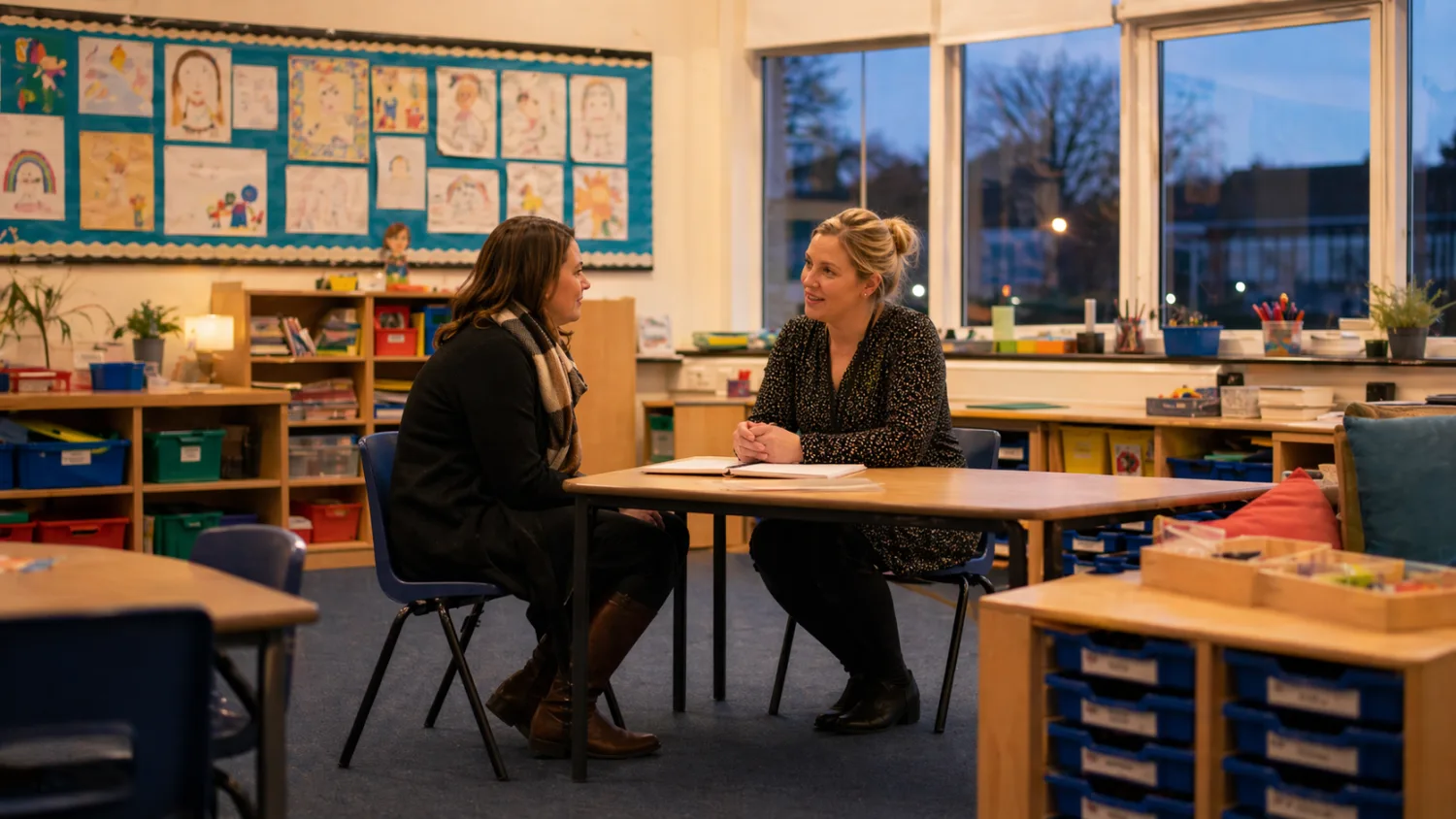
Most suspensions are followed by a reintegration meeting. This is an important moment, even if it feels uncomfortable.
The meeting is usually between parents, the child and a member of school staff. The aim is to agree how the child will return to school, what expectations are going forward, and what support might be needed.
This is not just a formality. A good reintegration meeting can make a real difference to whether the situation improves or repeats.
How to approach the reintegration meeting
Parents often go into these meetings feeling defensive or frustrated. That is completely understandable. But the most effective approach is usually a calm, problem-solving one.
Try to focus on three things: what happened, what needs to change, and what support your child may need. This is not about agreeing with everything the school says. It is about keeping the conversation productive.
If your child is struggling with behaviour, attention, anxiety or learning needs, this is the moment to raise that clearly. Sometimes suspensions highlight underlying issues that need more support rather than more punishment.
If that is the case, our guide to SEN support and EHCPs can help you understand what additional support might look like.
Do you have the right to challenge a suspension?
Yes, but it depends on the length and circumstances.
For shorter suspensions, parents can usually make representations to the governing body, but there may not be a formal hearing. For longer suspensions, particularly those over five days in a term, governors are more likely to review the decision.
This does not mean suspensions are frequently overturned, but it does mean there is a process for questioning whether the decision was appropriate.
If you believe the suspension was unfair or not handled properly, it may also be worth reading our guide on school complaints and concerns to understand how to raise issues constructively.
Will this affect your child’s future?
This is one of the biggest worries parents have.
In most cases, a single suspension does not define a child’s future. Schools deal with behaviour issues regularly, and many pupils move on without long-term consequences.
What matters more is what happens next. If behaviour improves, support is put in place, and the situation is handled constructively, a suspension can become a turning point rather than a lasting problem.
Repeated suspensions, however, can be more serious. They may indicate that something deeper is not being addressed, whether that is behaviour, wellbeing, or unmet needs.
How to support your child after a suspension
This is where parents often feel most unsure. There is a natural instinct to either come down very hard or to defend your child completely. In practice, neither extreme is usually helpful on its own.
Your child needs to understand that what happened matters, but also that they are not “written off” because of it.
Try to have a calm conversation about what happened. Not an interrogation, but a clear discussion. What led to it? What were they thinking at the time? What might they do differently next time?
At the same time, pay attention to how they are feeling. Some children feel embarrassed or anxious about returning. Others feel angry or misunderstood. Both reactions can affect what happens next.
If your child is already struggling with focus or behaviour, our article on when your child struggles to focus may help you think about underlying patterns rather than just the incident itself.
When suspension points to something bigger
Sometimes a suspension is not just about one incident. It is a sign that something is not working for your child in school.
That might be academic frustration, social difficulties, unmet SEND needs, anxiety, or a mismatch between the child and the school environment.
If suspensions are repeated, or if your child is increasingly disengaged, it may be time to step back and look at the bigger picture rather than focusing only on individual incidents.
What not to do
There are a few reactions that can make the situation harder.
One is escalating immediately into conflict with the school before you fully understand what happened. Another is dismissing the issue entirely and assuming the school is completely at fault without hearing the full picture.
It also helps to avoid framing the situation in absolute terms with your child — either “this is a disaster” or “this doesn’t matter at all”. Both can make it harder for them to reset and move forward.
A more realistic way to think about suspension
A suspension is serious. It should not be brushed off. But it is also not the end of your child’s education or a permanent mark against them.
In many cases, it is a moment where something has gone wrong — and where there is an opportunity to put it right.
The most helpful approach is usually a steady one: understand what happened, engage with the school, support your child, and focus on what needs to change next.
Quick answers to common questions
How long can a child be suspended for?
Up to 45 school days in total across an academic year, though most suspensions are much shorter.
Will my child fall behind?
Schools should provide work, but some disruption is normal. The focus should be on helping them re-engage when they return.
Can I challenge a suspension?
Yes, especially for longer suspensions, though outcomes vary depending on the case.
Does suspension go on a permanent record?
It is recorded by the school, but a single suspension does not usually define a child’s long-term future.
What is the difference between suspension and exclusion?
Suspension is temporary. Permanent exclusion means the child is removed from the school.
If you are dealing with this situation right now, the most important thing to remember is that one difficult moment does not have to define what comes next.